Why Agents Are Choosing Independent Brokerages in Dallas-Fort Worth (November 2026)
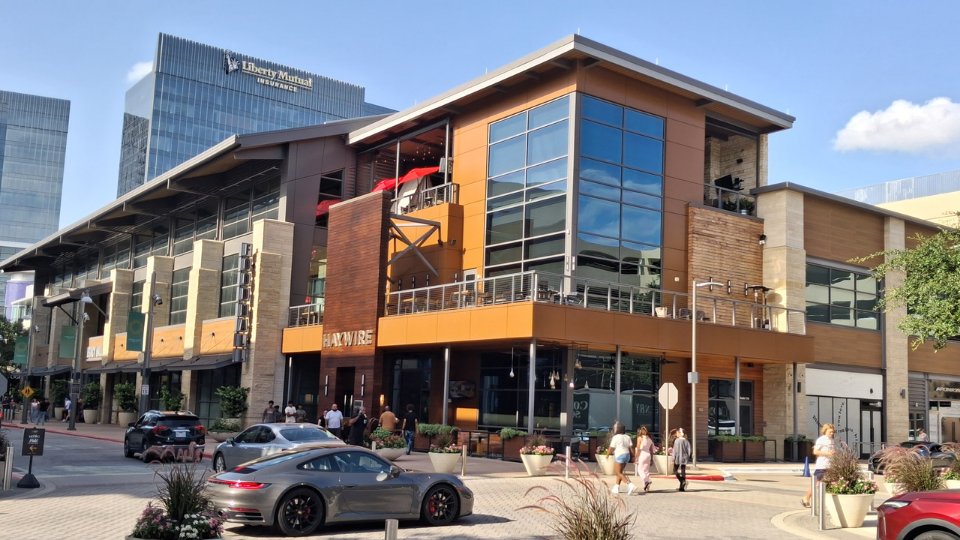
The Legacy West food hall and Haywire restaurant in Plano, Texas, photographed July 18, 2026, with office buildings including a Liberty Mutual tower in the background. This is a public street scene at a Plano mixed-use development, not an OnDemand Realty office. Photo: Ranch9613, via Wikimedia Commons, CC0 1.0. Original file: Legacy West Foodhall Plano, Texas.jpg, cropped and resized to fit.
When large brokerages recruit, they often lead with data: production dashboards, market-share charts and promises that their platform will help you close more business. In November 2026, that pitch met a colder set of numbers. Inman reported that net recruiting gains at the 100 largest U.S. brokerage brands fell sharply through September, according to new figures from Courted, a recruiting-software company that tracks the sales volume of agents who change firms.
For a producing agent in Dallas-Fort Worth, the useful question is not whether the "bigs" are getting bigger. It is this: if you do consider a move, what should you actually compare, and can an independent brokerage let you keep more of your commission without giving up the technology and tools you would expect at a national franchise or a big-box brand?
This guide summarizes the Inman report in our own words, then walks through a practical checklist: net take-home, fees, caps, tech stack, lead tools, support and errors and omissions coverage. It also explains how OnDemand Realty, an independent firm based in Frisco, Texas, publishes a 100% commission, flat-fee model, includes Lofty CRM in its annual Tech Deck, and appears on both of RealTrends' 2026 "500" lists based on calendar year 2025 sales. Confirm current terms on the careers page before you make a decision. This is not a ranked list of Dallas-Fort Worth brokerages, and it does not name or compare other firms.
Key Takeaways
- Recruiting at the largest brands cooled in 2026. Inman's November 5, 2026 report, drawing on Courted data for January through September, said net recruiting production at the top 100 U.S. brokerage brands was $24.3 billion, down 57% from the same stretch of 2025. Agents also left less often, so net growth shrank from 2.5% to 1%.
- A quieter market is not the same as a better offer. Courted's CEO cautioned, in Inman's account, against reading lower attrition as proof of a strong retention program. When fewer agents are in motion, the ones who do move can afford to look more carefully at the fine print.
- Compare net take-home, not the headline split. Ask what you pay per sale, after any cap, on leases and referrals, and each month. Add desk, franchise, software and errors and omissions fees, then compare that total with a published flat-fee schedule.
- Technology does not have to be the tradeoff. OnDemand's careers page says Lofty CRM, a personalized IDX website, BackAgent, Hurdlr and FOREWARN are included in a $600 annual Tech Deck fee charged on the first sale of the year.
- OnDemand is an independent with verified 2025 production. The firm's 2026 RealTrends Verified profile lists 2,875 sides, $754.03 million in volume, a national sides rank of 207, a national volume rank of 447, and 241 active licensed agents, based on calendar year 2025 sales. RealTrends classifies the firm as an independent affiliate in Frisco, Texas.
- The model is built for producing agents. A November 14, 2026 capture of the careers page requires at least six closed transactions in the past 12 months. Published sale fees are $500 on each of the first 15 sales each year and $50 after that cap, plus $50 on leases and referrals, with no monthly, desk, franchise, consumer or separate errors and omissions fees.
What the 2026 Recruiting Data Shows
The Inman article, written by Nick Pipitone and published November 5, 2026, is based on Courted's analysis of the 100 largest brokerage brands in the United States. Courted builds the figures from MLS records, de-duplicates agents across markets and firms, and measures the sales volume of agents who joined or left each brand, not simply a headcount of transfers. Courted also sells recruiting and retention software to brokerages, which is worth keeping in mind as you read the findings. Inman reported that Courted first published the numbers in a November 1, 2026 blog post and discussed them on a webinar.
The central finding is a steep drop in net recruiting gains. Through September 2026, the top 100 brands added $24.3 billion in production through recruiting, net of departures, which Inman said was 57% lower than the same period in 2025. Movement slowed in both directions.
| Measure | Courted figure, as reported by Inman | Period |
|---|---|---|
| Net recruiting production, top 100 brands | $24.3 billion, down 57% from 2025 | January through September 2026 versus the same stretch of 2025 |
| Production recruited (gross) | $176.6 billion, down 31% | January through September 2026 |
| Production lost to departing agents | Down 24% (a smaller decline than recruiting) | January through September 2026 |
| Recruiting as a share of combined annual volume | 7.2%, down from 11.4% | Same year-to-date window, 2026 versus 2025 |
| Attrition as a share of annual volume | 6.2%, down from 8.9% | Same year-to-date window, 2026 versus 2025 |
| Net growth rate | 1%, down from 2.5% | Same year-to-date window, 2026 versus 2025 |
| Third-quarter net volume gains | $2.2 billion, down from $17 billion in third quarter 2025 | Third quarter 2026 versus third quarter 2025 |
| Net growth, 10 largest brands | 0.69% | January through September 2026 |
| Net growth, brands ranked 11 to 25 | 0.9%, down from 4.05% | January through September 2026 versus 2025 |
Inman quoted Courted co-founder and CEO Sean Soderstrom as saying the largest individual brands are not getting bigger, and that the 10 largest brands account for roughly 70% of the top 100's volume. The sharpest percentage drop in net growth, in this data, was among brands ranked 11 to 25. Two caveats in the same report matter. First, Courted counts an acquired company toward a brand only when it is folded into that brand, so the data describes brand-level momentum, not the total scale a parent company may be assembling through mergers. Second, an informal October LinkedIn poll cited in the article found that about two-thirds of respondents expected the top 100's net recruiting gains to hold steady or grow, and that no respondent picked a decline of more than 50%.
On retention, Inman reported that 73 of the 95 brands in the top 100 in both years lost a smaller share of production to departures than a year earlier, and that median attrition fell from 6.3% of annual volume to 4.7%. Soderstrom's caution, as Inman relayed it, was not to mistake a quiet market for a strong retention program. Courted, as quoted in Inman, also expected fewer than 4 million existing-home sales in 2026 and argued that inbound recruiting alone would not carry brokerage growth. Those are Courted's views, reported by Inman, not a forecast we are independently making here.
This summary is based on the full Inman article as it appeared when we retrieved it on November 16, 2026. We have paraphrased the findings and have not copied Inman's wording or structure. For the original reporting, read the November 5, 2026 Inman article.
What the Slowdown Means for Agents Weighing a Move
Brokerage recruiting data is usually written for brokerage leaders. Agents can still use it. When transfers slow, firms that want to grow have to work harder to win the agents who are willing to listen. Inman relayed an anecdotal point from Soderstrom that the cycle from first outreach to a signed independent contractor agreement has gotten longer, and that agents at recently acquired firms are often waiting to see what a new owner actually offers before they move. Courted did not have data on the length of that cycle.
The practical implication is simple. If a recruiter is walking you through dashboards, ask what those dashboards will cost you after you sign, and what happens to your split, your cap and your software bill in year two. A slower market for agent movement gives you time to compare offers on paper. It does not make every offer better. Dallas-Fort Worth already has a mix of national brands, regional firms and independents. More options help only if you have a way to tell them apart.
What Agents Should Compare at Independent Brokerages
A recruiting presentation can make almost any model look efficient. Ask each firm the same questions, including this one, and write down the answers.
| What to compare | Questions to ask | Why it matters |
|---|---|---|
| Net take-home | If I close the same sales I closed last year, what do I pay in total, and what do I keep? | The headline split is not your net. A 70/30 split, a 100% plan and a capped plan can produce very different results once fees are included. |
| Fees and caps | What is the per-sale fee before the cap, after the cap, and on leases and referrals? Is there an annual technology fee? Are there monthly, desk, franchise or consumer fees? | Caps, monthly charges and "small" per-file fees add up. Ask for a written schedule. |
| Errors and omissions | Is coverage included, what is the limit, and is there a separate per-file or annual premium? | A plan that looks cheap can still invoice you for coverage on every closing. |
| Tech stack | Which CRM, website, transaction, accounting and safety tools are included in the advertised fee? Which features are paid add-ons? | Enterprise software billed separately can erase the savings from a lower split or a flat transaction fee. |
| Lead tools | Does the firm assign, sell or guarantee leads? If not, what listing marketing, ad training or CRM lead features are actually included? | "We will help you get leads" can mean a purchased lead program, a paid CRM feature or simply training. Those are not the same thing. |
| Support | Can you reach a broker at night or on a weekend? Is there a regular meeting cadence and a training library? Are there real offices you can use? | Production support shows up when a contract issue lands on a Sunday evening, not only at a launch lunch. |
| Verified production | Can the firm point to independently verified sides, volume and a dated ranking, and what year do those numbers cover? | In-house totals are hard to compare. A third-party ranking applies the same rules to every firm that qualifies. |
If you are coming from a traditional split, run last year's gross commission income through your current fees and through the other firm's published fees, including annual packages and monthly software. If you are already on a flat-fee plan, compare the cap, the after-cap fee, and what the technology package includes, not only the per-deal number.
Before you sign anywhere, pull last year's closed sales and gross commission income, add every fee you actually paid, request a written fee schedule and a written list of included software, and confirm whether your rate is grandfathered if fees rise. Separate lead promises from marketing support, check independently verified production, and treat the independent contractor agreement, not a blog post or a recruiting deck, as the controlling document.
An Illustrative Net Take-Home Comparison
The figures below are a hypothetical example, built so you can see how the arithmetic works. They are not a promise of income, not a quote, and not a comparison to any named brokerage. Splits, caps and add-on fees vary widely. Use your own numbers.
The illustration uses two production levels: 15 closed sales in one calendar year and $180,000 in gross commission income (GCI), and 25 closed sales and $300,000 in GCI. Those GCI totals are assumptions for the example, not Dallas-Fort Worth averages and not a statement about standard commission rates. Commissions are negotiable.
The OnDemand column uses only the published fees from the November 14, 2026 careers-page capture: a $600 Tech Deck fee on the first sale of the year, $500 on each of the first 15 sales, and $50 on each sale after that cap. It assumes no lease or referral fees in the year, and no optional $240 onboarding kit.
The other two columns are generic hypotheticals. In the uncapped 70/30 column, the brokerage retains 30% of GCI, with no monthly, desk, franchise or per-file fees assumed; many real-world plans do charge those extras. In the capped column, the brokerage retains 30% until the agent has paid $18,000, which in this math occurs once GCI reaches $60,000. After the cap, the example assumes the agent keeps 100% with no after-cap transaction fee and no monthly fees. An $18,000 cap is an assumption for this illustration, not an industry standard. If a real plan keeps charging monthly software, desk or errors and omissions fees after the cap, the agent's net would be lower than the figures shown.
| Item | 15 sales, $180,000 GCI | 25 sales, $300,000 GCI |
|---|---|---|
| Hypothetical 70/30, no cap: fees paid to the brokerage | $54,000 | $90,000 |
| Hypothetical 70/30, no cap: agent net | $126,000 | $210,000 |
| Hypothetical 70/30 with $18,000 cap: fees paid to the brokerage | $18,000 | $18,000 |
| Hypothetical 70/30 with $18,000 cap: agent net | $162,000 | $282,000 |
| OnDemand published fees (Tech Deck plus transaction fees) | $8,100 ($600 + 15 x $500) | $8,600 ($600 + 15 x $500 + 10 x $50) |
| OnDemand net, based on those published fees | $171,900 | $291,400 |
| Difference, OnDemand net versus uncapped 70/30 | $45,900 more kept | $81,400 more kept |
| Difference, OnDemand net versus capped 70/30 | $9,900 more kept | $9,400 more kept |
The gap is largest against an uncapped 70/30 split, because 30% of a strong year is a large number. Against a generous cap with no after-cap fees, the dollar gap is smaller, though OnDemand's published fees are still lower in both columns. The table also does not add a separate software bill to the hypothetical columns. If you currently pay for your own CRM, website, transaction platform or errors and omissions policy, include those costs on your current-brokerage side before you decide that a split "includes everything."
OnDemand's careers page states that an individual agent pays $549 a month for Lofty on their own, and that Lofty is included in the Tech Deck at OnDemand. That $549 monthly figure is OnDemand's published comparison, not a price we independently verified for this post, and it should not be treated as what every large brokerage charges. If you want to plug in your own sales count, average price and current split, use the calculator on OnDemand's careers page and confirm the live fee schedule before you rely on it.
Why OnDemand Realty Stands Out Among Independent Brokerages
Independents are not all alike. Some are small shops with limited software. Some are large regional firms with a traditional split. OnDemand's published model is a flat-fee, 100% commission independent that still puts a modern tech stack, broker access and physical offices behind producing agents. The points below use only the firm's RealTrends profile and the November 14, 2026 capture of www.ondemanddfw.com/careers. The careers-page motto is "The Brokerage Built By The Agent, For The Agent." The same page says the goal is to keep as much money in the agent's pocket as possible without overcomplicating the model, and that OnDemand is not a multi-level company with uplines and downlines.
Published 100% commission and flat fees
According to the November 14, 2026 careers-page capture, OnDemand agents work on a 100% commission schedule with these fees:
| Item | What the careers page states |
|---|---|
| Sale transactions, first 15 each year | $500 per transaction |
| Sale transactions after the cap | $50 per transaction |
| Tech Deck package | $600 per year, charged on the first sale of the year |
| Leases and referrals | $50 per transaction |
| Monthly, desk, franchise or consumer fees | None, according to the careers page |
| Separate errors and omissions fees | None, according to the careers page, which also cites up to $250,000 in coverage for claims involving seller negligence and nondisclosure |
| Mandatory onboarding fee | None. An optional $240 kit includes business cards, open house signs, and a personalized for-sale sign |
| If fees rise later | Agents are grandfathered at the transaction-fee and cap terms they sign up for, for the rest of their career at OnDemand |
The careers page also says, "You don't pay a dollar until you make a dollar." Lease and referral payments are processed via Zelle on the same day the firm receives the check, and agents can typically receive a commission disbursement authorization from BackAgent within 24 hours of entering the file. Confirm the current schedule and coverage limits on the live careers page, which controls if this post and the page ever differ.
Enterprise-grade technology included in the Tech Deck
The usual objection to a low-fee independent is that you will have to buy your own tools. For the $600 annual Tech Deck fee, the careers page lists Lofty CRM, a personalized website with IDX integration, BackAgent, Hurdlr and FOREWARN. It also lists a free Zipforms or TransactionDesk account, free color printing at all offices, a Vistaprint discount with tax-free pricing and free shipping, free marketing materials, pre-made Canva templates, and a ListReports account for open-house flyers. Lofty is the same category of enterprise customer-relationship platform that many agents associate with larger brands. The $549-a-month comparison noted above is the firm's own published figure, not a price we independently verified.
On leads, the page is direct: OnDemand does not offer a company lead-generation program. What it does provide, according to the same page, is free listing marketing, including automated new-listing email blasts from IDXblast, automated posts on OnDemand Realty's Facebook and Instagram pages (a combined following of more than 32,000, per the careers page), editable listing presentations and marketing templates, and access to a proprietary iBuyer program for sellers who want to see a cash offer. Lofty also has paid features for collecting and converting online leads, and the firm's 101 Page includes training on Facebook ads and subdivision-specific Google ads. If assigned company leads are a requirement for you, this is not that model. If you already generate your own business and want the software and listing support included in a flat fee, that is the offer the careers page describes.
Broker support, training and real offices
The careers page says an OnDemand broker is on call seven days a week, including evenings and weekends. Weekly accountability meetings run from 11 a.m. to 1 p.m., rotating across the metro: Mondays in Cedar Hill, Tuesdays in Dallas, Wednesdays in Fort Worth and Thursdays in Plano. Monthly Lunch and Learns are held on the first Thursday of each month at the Plano training facility. Between meetings, the 101 Page learning system includes more than 100 editable Canva templates, recordings of past Lunch and Learns, and more than 180 modules on TREC and TXR forms, contract scenarios, company technology, company forms and logos.
OnDemand maintains brick-and-mortar offices in Cedar Hill, Dallas, Fort Worth and Plano, with Plano listed as headquarters on the careers page. The public site also lists a Frisco office, and RealTrends identifies the firm as based in Frisco. The company says it handles MLS and Supra eKey transfers with the agent's board and is part of MetroTex, ARBOR, GFWAR, AAOR and HAR. Onboarding is described as two steps, completed in under 10 minutes. Preferred vendors are offered but not required. Personal and team branding is allowed if it is TREC compliant, and a team commission plan is available, though the full team schedule is not published on the careers page, so it is not described here. Agents who refer a Realtor who has closed six or more sale transactions in the past 12 months are eligible, per the careers page, for a $2,000 cash recruiting bonus.
Independently verified production
Fee schedules are only half of a brokerage comparison. The other half is whether the firm actually closes business. OnDemand's public RealTrends Verified profile reports the following for the 2026 rankings, which are based on calendar year 2025 residential sales:
| Item | Figure | Source and period |
|---|---|---|
| Ranking program | 2026 RealTrends Verified brokerage rankings | RealTrends profile, based on 2025 sales data |
| Transaction sides | 2,875 | RealTrends profile, 2025 sales data |
| Sales volume | $754.03 million | RealTrends profile, 2025 sales data |
| Average home price | $262,300 (shown as $262.3K) | RealTrends profile, 2025 sales data |
| National sides rank | 207 | RealTrends profile, 2026 rankings |
| National volume rank | 447 | RealTrends profile, 2026 rankings |
| Awards listed | 500 by Sides; 500 by Volume | RealTrends profile |
| Active licensed agents | 241 | RealTrends profile |
| Brokerage type and location | Independent affiliate, Frisco, TX | RealTrends profile |
Use 241 when you cite the ranking-year roster. The careers page, captured later in 2026, says the firm has recently surpassed 300 Realtors in Dallas-Fort Worth and still describes itself as a small, family-feel brokerage at heart. Those are two different dates and two different counts. Our longer walkthrough of the RealTrends figures is in OnDemand Realty in the 2026 RealTrends Verified Rankings. For a criteria-based look at how to evaluate firms, see Best Brokerages to Work For in Dallas-Fort Worth (2026).
Built for producing agents
OnDemand is explicit about who the model is for. The careers page says the firm is firm on a requirement of at least six closed transactions in the past 12 months, because agents who are already closing business are the ones who thrive in the model. It is not positioning itself as a new-agent training brokerage. If you are newly licensed, or if your production has been below that threshold over the past year, this is probably not the right fit. A 100% commission plan with a modest cap and included software is most meaningful for agents who already have a pipeline, a database and a way to win listings.
Frequently Asked Questions
Why are large brokerages recruiting less in 2026?
According to Inman's November 5, 2026 report on Courted's data, agents moved less in both directions through September 2026. Recruiting production at the top 100 brands fell 31%, production lost to departures fell 24%, and net growth shrank from 2.5% to 1%. Courted's explanation, as Inman relayed it, included a slower housing market and, anecdotally, longer decision cycles during a period of consolidation. Inman did not present those figures as a forecast for Dallas-Fort Worth.
If I join an independent, do I have to give up the same technology the big brokerages use?
Not necessarily, but you should ask for a written list. At OnDemand, the careers page says the $600 annual Tech Deck includes Lofty CRM, a personalized IDX website, BackAgent, Hurdlr and FOREWARN, along with Zipforms or TransactionDesk, printing, marketing materials and templates. The right question is what you get for the fee you will actually pay, and what costs extra.
What does OnDemand Realty charge, all in?
On the November 14, 2026 careers-page capture, the published sale fees are $500 on each of the first 15 sales each year, $50 after that cap, a $600 Tech Deck fee on the first sale of the year, and $50 on leases and referrals. The page says there are no monthly, desk, franchise, consumer or separate errors and omissions fees, and no mandatory onboarding fee. An optional $240 kit is available. Those transaction-fee and cap terms are grandfathered if the firm later raises them, according to the same page. Confirm the live schedule on the careers page.
Does OnDemand assign leads to agents?
No. The careers page says the firm does not offer a company lead-generation program. It does include Lofty, free listing marketing, ad-training resources on the 101 Page, and paid Lofty features that agents can use to collect and convert online leads. If you need a brokerage that buys or assigns leads as part of the split, this is not that model.
How much experience do I need to join?
The careers page says OnDemand requires at least six closed transactions in the past 12 months and is firm on that threshold. The $2,000 recruiting bonus for referring a Realtor uses the same six-sale standard. The firm is not describing itself as a landing place for newly licensed agents who are still building their first pipeline.
How do I know the production figures are real?
OnDemand's 2026 RealTrends Verified profile, based on calendar year 2025 sales, lists 2,875 sides, $754.03 million in volume, a $262,300 average home price, a national sides rank of 207 and a national volume rank of 447, with 241 active licensed agents. RealTrends classifies the firm as an independent affiliate in Frisco, Texas. Those rankings can be checked on the public RealTrends profile. The $262,300 figure is RealTrends' published average, not an MLS median.
Related OnDemand Realty Posts
- Best Brokerages to Work For in Dallas-Fort Worth (2026)
- OnDemand Realty in the 2026 RealTrends Verified Rankings: A November 2026 Guide
- Careers at OnDemand Realty
- How Much Does It Really Cost to Sell a House in Texas? November 2026 Guide
- Why Buyers and Sellers Should Track the MBA Mortgage Applications Index
- Seller-Paid 2/1 Buydown: Worth It? Pros, Cons and Math
Thinking About Your Next Step in Dallas-Fort Worth?
OnDemand Realty is an independent Dallas-Fort Worth brokerage based in Frisco, Texas, with offices in Cedar Hill, Dallas, Fort Worth, Plano and Frisco. If you are a producing agent and want to see whether the published 100% commission model and included Tech Deck fit your business, start at www.ondemanddfw.com/careers. If you want help buying or selling a home, start at www.ondemanddfw.com.
Disclaimer: This post is for general information only. It is not a guarantee of future production, a promise about any agent's income, a job offer, a recruiting offer or a formal market analysis. It is not a ranked list of Dallas-Fort Worth brokerages and does not name or compare other firms. The recruiting figures are a paraphrase of reporting by Inman in "The bigs are not getting bigger: Brokerage recruiting cools sharply in 2026," published November 5, 2026, which relied on data from Courted. Courted sells recruiting and retention software to brokerages. We retrieved the full Inman article on November 16, 2026, and summarized it in our own words. Confirm the original reporting on Inman's website. The illustrative take-home table is a hypothetical example that uses assumed gross commission income, an assumed 70/30 split and an assumed $18,000 cap. It is not a comparison to any named firm and is not a quote. The RealTrends figures are from OnDemand Realty's public RealTrends Verified profile and reflect the 2026 RealTrends Verified brokerage rankings based on calendar year 2025 residential production. The average home price of $262,300 is RealTrends' published figure, not an MLS median. Compensation, training, technology, office, onboarding and culture details are summarized from OnDemand's careers page at www.ondemanddfw.com/careers, reviewed from a November 14, 2026 capture of that page. Those terms can change. The $549 monthly Lofty comparison is OnDemand's own published claim, not an independently verified price. Confirm current fees, policies and the experience requirement on the live careers page, which controls if this post and the page ever differ. OnDemand Realty is not affiliated with Inman, Courted or RealTrends.
Categories
Recent Posts